


FAQs: Lumpy Skin Disease (LSD)
Basic Information about Lumpy Skin Disease (LSD)
What is lumpy skin disease?
Lumpy skin disease is a highly contagious viral disease of cattle, caused by the lumpy skin disease virus, which belongs to the Capripoxvirus genus. The disease is characterized by nodular skin lesions, fever, swollen lymph nodes and production losses in affected animals.

In which parts of the world is lumpy skin disease endemic
or currently present?
Lumpy skin disease is endemic in sub-Saharan Africa and widely present across the Middle East, North Africa, South Asia, Southeast Asia, Central Asia and Russia. Whilst Europe became the first region to become free of the disease again, after controlling the 2015-2018 outbreaks in Southeast Europe, the disease has recently re-entered Europe with outbreaks in Italy and France in 2025. Elsewhere, Australia and the Americas remain lumpy skin disease free.
Which animal species are affected by lumpy skin disease?
Lumpy skin disease virus primarily affects cattle and water buffalo. The virus may cause varying degrees of clinical signs in other hooved animals (ungulates) like yaks, dromedary camels, giraffes, Indian gazelles, and impalas. To date, no lumpy skin disease cases have been reported in goats and sheep, despite being kept in close proximity with cattle. However, goats and sheep are affected by goat pox virus and sheep pox virus that produce signs similar to lumpy skin disease.
Does lumpy skin disease affect humans?
No, the disease is not zoonotic, meaning it does not spread from animals to humans. Humans are not affected by lumpy skin disease.
Clinical signs and diagnosis
What are the signs of lumpy skin disease in infected cattle?
The most commonly observed clinical signs in infected cattle include:
- Fever that may exceed 41°C,
- Decreased milk production in dairy cattle,
- Depression, anorexia and emaciation,
- Rhinitis, conjunctivitis and excessive salivation,
- Enlarged superficial lymph nodes,
- Firm, round, raised skin nodules measuring 10-50 mm over the body particularly on the head, neck, limbs, udder, genitalia and perineum. These nodules are well circumscribed and involve the skin, subcutaneous tissue and sometimes even the underlying muscles,
- Large nodules may become necrotic and eventually fibrotic and persist for several months (“sit-fasts”); the scars and damage to hides may remain indefinitely. Small nodules may resolve spontaneously without consequences,
- Myiasis of the nodules may occur,
- Pox lesions, erosions and ulcers may develop in the mucous membranes of the mouth and alimentary tract and in the trachea and lungs,
- Limbs and other ventral parts of the body, such as the dewlap, brisket, scrotum and vulva, may be oedematous, causing the animal to be reluctant to move,
- Mastitis,
- Temporary or permanent reduction in fertility in both male and female animals,
- Abortions in some cases, and
- Death in severe cases.
How is lumpy skin disease transmitted to healthy cattle?
Lumpy skin disease is primarily transmitted through the bites of insect vectors, such as biting flies, mosquitoes, midges, and ticks, which carry the virus from infected to healthy animals. Although less common, the disease can also spread through direct or indirect contact with skin lesions, saliva, nasal discharge, milk, or semen from infected animals via contaminated equipment, feed, water, or other fomites.
How long does it take for exposed cattle to show
clinical signs?
Cattle typically develop clinical signs of lumpy skin disease between 4-14 days after exposure, but can take up to 28 days to show signs.
How is lumpy skin disease diagnosed in cattle?
A presumptive diagnosis for lumpy skin disease is typically done based on clinical signs such as characteristic nodules along with systemic signs like fever and enlarged superficial lymph nodes. However, confirmatory diagnosis can be done using laboratory diagnostic tests including:
Virus Detection:
- Conventional or Real-Time Polymerase chain reaction (PCR or RT-PCR): least expensive and quickest method for detection of lumpy skin diseasevirus. Suitable samples – skin nodules and scabs, saliva, nasal secretions, and blood. Even though DIVA PCR (Differentiation of Infected and Vaccinated Animals PCR) tests have been developed in more recent years with the ability to differentiate between vaccine, classical and recombinant wild type (field) virus strains, these tests are not yet commercially available.
- Virus isolation: confirms the presence of live virus in the sample; time intensive.
- Immunohistochemistry: can be used to identify presence of virus to the genus level. Suitable samples – skin nodule biopsy or lymph node biopsy.
- Sequencing (partial or whole-genome): provides the most information relating to cluster grouping (classical field, vaccine-like or more recently, recombinant strains).
A presumptive diagnosis for lumpy skin disease is typically done based on clinical signs such as characteristic nodules along with systemic signs like fever and enlarged superficial lymph nodes. However, confirmatory diagnosis can be done using laboratory diagnostic tests including:
Immune Response Detection: (*cannot distinguish between Capripoxvirus genus (sheeppox virus, goatpox virus and lumpy skin disease virus))
- Virus Neutralisation Test (VNT): gold standard test for the detection of antibodies raised against capripoxviruses.
- Enzyme Linked Immunosorbent Assay (ELISA): commercial kits available for detection of capripoxvirus antibodies.
- Indirect Fluorescent Antibody Test (IFAT).
How long can an infected animal transmit the disease
through vectors or other pathways?
The virus is present intermittently in the blood from approximately 7 to 21 days post infection facilitating transmission by biting insects during this period. Moreover, the infected animals can shed the virus for up to 6 weeks post infection, mainly through skin lesions, nasal discharge, saliva, and other secretions, posing a continued risk of transmission to other animals and the environment.
Can recovered animals transmit the disease or become
carriers of the lumpy skin disease virus?
There is no known carrier state. In an immunocompetent animal, once the animal has recovered from the infection, it is well protected and cannot be the source of infection for other animals. After the cessation of clinical signs of the disease, the virus may remain in blood for a few weeks and eventually disappear.
Treatment, prevention, and control
How do you treat lumpy skin disease in infected cattle?
There is no specific treatment for lumpy skin disease as it is a viral disease. The disease management varies with the lumpy skin disease status of the country. In countries where lumpy skin disease is present without eradication efforts, treatment focuses on supportive care. Supportive measures may include anti-inflammatories, antibiotics for secondary infections, and wound care. Despite supportive treatment, animals with severe cases may still die or experience long-term effects such as reduced fertility, impaired weight gain, and permanent hide damage. Countries that are lumpy skin disease free and experience an outbreak may aim to control and eliminate the disease quickly to regain lumpy skin disease free status. Their approach, in accordance with national plans and international protocols, may include culling of infected animals/herds in combination with movement controls, vaccination, and vector control.
How to prevent and control the transmission of lumpy skin disease in cattle?
In countries where the disease is prevalent, the following measures can effectively prevent and control lumpy skin disease: a combination of annual vaccination using a high-quality live attenuated homologous lumpy skin disease vaccine, routine disease surveillance, movement restrictions on infected animals, and strict farm-level biosecurity. Key biosecurity measures include the isolation (or culling where practiced) of infected animals, and vector control strategies such as insecticide use, application of repellents on animals and fly traps. Additional recommended biosecurity measures include quarantining incoming stock, avoiding sharing of needles used during vaccination or administering drugs between animals or at least between sick and healthy animals, and disinfecting farm equipment before use. These are the suggested measures however, not all may be applicable in all regional contexts.
In lumpy skin disease free countries that are undergoing a lumpy skin disease outbreak, disease control efforts should focus on rapid containment and eradication where possible. This may be achieved by implementing measures such as emergency mass vaccination of healthy animals, strict movement restrictions, enhanced biosecurity, culling and proper disposal of carcasses after treating with insecticides, and thorough disinfection of contaminated equipment and animal housing. Additional supportive actions include use of personal protective equipment (PPE) by farm workers and veterinarians and public awareness campaigns to improve early detection and reporting. These control strategies may be adapted to the disease control goals, needs, and resource availability in the region or the country.
In lumpy skin disease free countries neighbouring outbreak zones, heightened vigilance is essential due to the risk of cross-border transmission via insect vectors, animal movements, or contaminated materials. Preventive actions include enhanced border surveillance, movement controls on animals, animal products, and feed across border, vector and wildlife control in the protection zone near the border, risk-based surveillance, pre-emptive barrier vaccination in high-risk zones (regional-level), and community engagement through education and awareness programs. In some situations, pre-emptive vaccination may be undertaken at the national level if the risk of spread from a neighbouring country is determined to be sufficiently high.
In geographically distant lumpy skin disease free countries, the focus should remain on maintaining strict import controls, enforcing quarantine protocols, and implementing national preparedness plans, including establishing a vaccine bank agreement to ensure timely access for rapid deployment of vaccine during outbreaks, training animal health workers for the disease recognition, and building diagnostic and surveillance capacity for timely detection and disease confirmation.
How does lumpy skin disease economically impact
the producer?
Lumpy skin disease causes economic losses through reduced milk yield, infertility, abortion, poor weight gain, damaged hides, and increased mortality in young and severely affected animals.
What are the trade implications of a lumpy skin disease
outbreak?
An outbreak can lead to immediate suspension or restrictions on the export of live cattle, germplasm, hides, selective tissue products, and unpasteurised milk and milk products. These restrictions remain until international standards for regaining disease-free status are fulfilled.
Should vector control be used alongside vaccination?
While direct evidence is limited, combining vaccination with vector control using insecticides, repellents, and pasture management can help reduce transmission pressure, especially during peak vector seasons.
Is culling/stamping out required during an outbreak in
lumpy skin disease free countries?
Culling (or total stamping out) is not a requirement but has been recommended for rapid control of the disease in countries previously free from lumpy skin disease. Culling (or total stamping out) is practiced depending on national policy of the country and outbreak scale. For effective control and eradication, a combination of control measures including vaccination, strict biosecurity, and vector control may be used.
Why culling alone may not be effective for controlling
lumpy skin disease?
Culling (or total stamping out) infected animals without addressing other transmission routes is often insufficient to control lumpy skin disease, especially in regions with high vector activity. The disease is primarily spread by biting insects, which can transmit the virus between animals regardless of direct contact. Without vector control, movement restrictions, vaccination, and biosecurity measures, the viruscan continue to circulate and spread. Additionally, culling alone may not be feasible or socially acceptable in large outbreaks, making an integrated approach essential for effective and sustainable lumpy skin disease control.
Vaccination
Please note that these FAQs are primarily focused on live attenuated (modified live) vaccines, though some general information applicable to other vaccine types is also included where relevant.
Are vaccines available for lumpy skin disease, and are
they effective?
Yes. Vaccines are available and are highly effective in preventing clinical disease and controlling outbreaks. Two vaccine types exist: homologous vaccines, such as those based on the Neethling virus strain (proven highly effective in field and experimental conditions, including mass vaccination elimination campaigns), and heterologous vaccines derived from sheep (less effective)- or goatpox viruses (not proven in mass vaccination elimination campaigns).). In endemic regions, annual vaccination is recommended, while in lumpy skin disease free countries, vaccination is applied either preventively in high-risk zones or during emergency response. It is important to choose only high-quality vaccines. There may be difference between individual vaccine product characteristics, such as the in-use shelf life.
What is the recommended vaccination schedule?
Vaccinate healthy cattle only, ideally before the outbreak season. Vaccination schedules will depend on the individual product used, but generally follows the below regimen;
- First dose: 4 – 6 months of age or older subject to the presence or absence of maternal antibodies.
- Calves from unvaccinated dams can usually be vaccinated at any age.
- Revaccination: Annually if required.
- Newly purchased animals should be vaccinated 28 days before the introduction to the herd.
- Animals should be vaccinated 28 days before the transport or movement to another place.
What is the recommended dose of the vaccine?
The dosage may vary with the type of vaccine and the manufacturer. For proper administration, please follow the manufacturer’s instructions.
What are the standard guidelines for vaccinating an animal?
- Use the vaccine only in the registered target species, most commonly cattle (and maybe water buffalo).
- Vaccinate only healthy animals to ensure an optimal immune response.
- Do not vaccinate sick, immunocompromised, or animals showing clinical signs of lumpy skin disease.
- Use single-use needles for vaccinating the animals as shared needles pose a risk of disease spread from non-clinical and sub-clinical animals to healthy ones.
- A few commercial live attenuated vaccines are indicated as safe to use in pregnant and lactating animals. Always check the product label or summary of product characteristics (SPC) before use.
- Please follow the manufacturer’s instruction on handling, storing, reconstituting, and administering the vaccine to the target animal species.
Can the milk and meat from the vaccinated animal
be used?
Follow the recommended withdrawal period for milk and meat specified on the product label, together with any specific national country guidelines. Some commercial vaccines offer zero-day milk and meat withdrawal period, meaning the milk and meat can be consumed immediately after vaccination, however, this may vary with the manufacturer.
Can the vaccine be administered at the same time as
another vaccine?
There is limited research in regard to administering a lumpy skin disease vaccine alongside other vaccines. Always consult the product label or summary of product characteristics (SPC) before use and your veterinarian for advice in cases where no specific guidance is provided.
Can vaccines be used during an outbreak, and how soon
do they work?
Yes, emergency vaccination is a widely used control measure during outbreaks. However, protective immunity typically develops within 10-15 days after vaccination with full protection by 3-4 weeks, so early deployment is critical. Only healthy animals should be vaccinated.
When is the best time to vaccinate in relation to
vector activity?
Cattle should ideally be vaccinated 3–4 weeks before the expected rise in biting insect populations, typically just ahead of the rainy or warmer seasons.
How long does immunity last after vaccination?
Immunity generally lasts for at least one year, although duration can vary depending on the vaccine strain and the individual animal’s immune response. Live attenuated (modified live) lumpy skin disease vaccines may cause mild adverse reactions in cattle including a localised reaction at the injection site, temporary fever, and a transient drop in milk yield. In some cases, a mild generalised reaction involving small, superficial skin lesions (called Neethling response) may develop, that usually disappear within 2-3 weeks without leaving any visible marks.
Can a live vaccine cause disease in vaccinated
animals due to reversal of virulence of the attenuated
(modified) virus?
There is no evidence to indicate return to virulence of the lumpy skin disease vaccine strain, or recombination with field virus, after the use of a high quality, live attenuated (modified live) lumpy skin disease vaccine. The Neethling-type vaccine strain (virus strain used in live attenuated vaccines) has been used extensively for more than 60 years, vaccinating millions of animals, with NO reports of vaccine virus regaining virulence.
Is it possible for vaccinated animals to still get infected?
The immune response following vaccination is generally fully developed 3-4 weeks post vaccination. During this time, cattle may get infected by the circulating lumpy skin disease virus and show clinical signs. Animals, who at the time of vaccination, may have been in the incubation period for the disease, can develop clinical signs less than ten days after vaccination.
In rare instances, the vaccination may not provide adequate protection, resulting in clinical disease. This does not necessarily mean that the vaccine was ineffective and can be influenced by multiple factors associated with the host (inadequate immune response generation, underlying disease); the vaccinator (improper administration, dosage, handling and reconstitution of the vaccine, or vaccinating unhealthy animals); and the vaccine itself (improper cold chain maintenance, low quality product). It is advisable to properly investigate each situation where vaccination appeared to be ineffective in providing adequate protection against the disease. Identifying the cause and addressing it at its source is essential to improve future vaccine effectiveness and outbreak control.
Which vaccine type is recommended?
Homologous attenuated (modified) live vaccines (Neethling-virus strain) are preferred due to their higher efficacy and have proven to be highly effective in mass vaccination campaigns in varying field settings. Only high-quality vaccines should be selected.
Economic and trade implications
How does lumpy skin disease economically impact
the producer?
Lumpy skin disease causes economic losses through reduced milk yield, infertility, abortion, poor weight gain, damaged hides, and increased mortality in young and severely affected animals.
What are the trade implications of an lumpy skin disease outbreak?
An outbreak can lead to immediate suspension or restrictions on the export of live cattle, germplasm, hides, selective tissue products, and unpasteurised milk and milk products. These restrictions remain until international standards for regaining disease-free status are fulfilled.
Who can request and obtain lumpy skin disease vaccines?
Depending on the regulatory guidelines of the country, the product can either be available via a prescription or as an over-the-counter vaccine. If you are uncertain about the availability in your country, please contact your local veterinarian or para veterinarians. For lumpy skin disease free countries, the government in collaboration with the national veterinary authorities are typically responsible for procuring and distributing lumpy skin disease vaccines should a decision be made to vaccinate post outbreak. The emergency or mass vaccination campaigns are coordinated through government-led efforts, often in collaboration with international agencies or regional vaccine banks.
What is the minimum vaccine coverage needed to achieve herd immunity?
Vaccination of at least 80% of the cattle can effectively stop virus circulation and achieve herd-level protection. Published data states that eradication of the disease can be achieved in 2 years with 90% vaccination coverage.
Can the vaccination response in a herd be measured or monitored post-vaccination?
Yes, the vaccination response in a herd can be measured or monitored post-vaccination through active and passive surveillance. Active clinical surveillance would involve thorough physical examination of the herds by trained veterinarians to look for characteristic signs of the disease. Absence of new cases is indicative of an effective vaccination campaign. Passive surveillance using serological test like ELISA can be used 2 to 3 months after vaccination to assess the antibody response in the animals. However, not all animals may elicit the same level of antibody response, leading to some being undetected by the ELISA.
Why is vaccination not routinely practiced in lumpy skin disease free countries?
Routine vaccination is avoided in lumpy skin disease free countries to preserve disease-free status as recognized by the World Organisation for Animal Health (WOAH), which has economic and trade implications.
Why does the World Organisation for Animal Health
(WOAH) not grant lumpy skin disease free status to
countries that use vaccination?
The World Organisation for Animal Health (WOAH) does not consider vaccination compatible with lumpy skin disease-free status because it can interfere with disease detection, making it difficult to distinguish between vaccinated and infected animals using standard surveillance tools. This may mask the presence of the virus, complicating eradication and increasing the risk of undetected transmission. Therefore, countries that use vaccination as a preventive measure cannot be officially certified as lumpy skin disease free until a defined period after vaccination has ceased and surveillance confirms the absence of infection. This ensures transparent and credible disease status critical for international trade and disease control.
Bovilis® cattle vaccines against Lumpy Skin Disease (LSD)
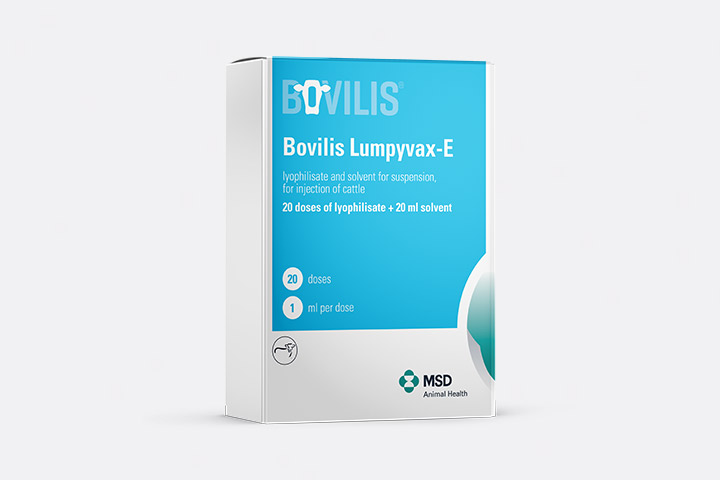
Bovilis® Lumpyvax-E
Bovilis® Lumpyvax-E is a live attenuated Neethling virus vaccine used as a subcutaneous injection for the prophylactic immunization of cattle of all ages for the control of lumpy skin disease.
